Mridanga Shaileshwari Temple Muzhakkunnu
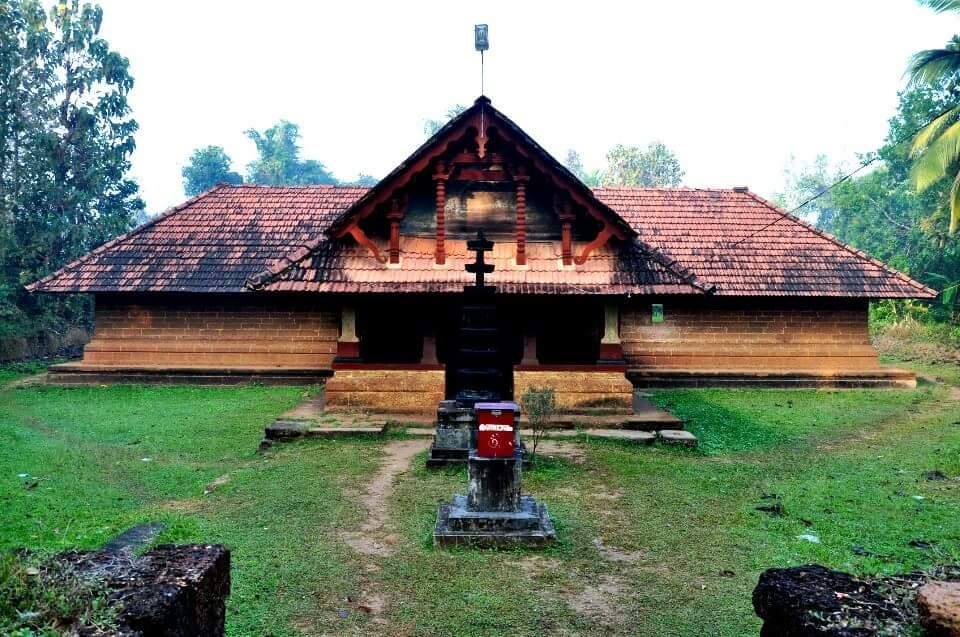
Located in the quiet village of Muzhakunn in the Kannur district of Kerala, the Sri Mridanga Shaileshwari Temple is a place where deep royal history, artistic origin stories and mysterious legends converge. Revered as one of the 108 ancient Durga temples, traditionally believed to have been established by Parashurama, this sacred temple holds a high place in the cultural landscape of Malabar. The temple derives its unique name from a fascinating celestial legend: it is said that a divine percussion instrument, the Mridanga, fell from heaven at this location, emitting a majestic sound that echoed through the hills. This event gave the surrounding landscape the ancient name Mridanga Shailesh, which over the centuries has evolved into the modern village name Muzhakunn, meaning “echoing hill”. Inside the inner sanctum, the four-armed goddess Durga is worshipped not only as a protector but also primarily as a manifestation of Goddess Saraswati, making her the ultimate patroness of music, knowledge and the fine arts.
Historically, the temple was the ancestral family shrine of the Kottayam royal family. It shares an unbreakable bond with the warrior king of Kerala, Veerapazhassi Raja, also known as the “Lion of Kerala”. History has it that the brave king would bow down before the goddess, who was worshipped in the form of a fierce warrior named Porkali Devi, to seek strength and divine blessings before leading guerrilla warfare operations against the British colonial rule. Beyond its royal and martial associations, the temple is universally celebrated as the birthplace of the female form of Kathakali, Kerala’s world-famous dance-drama. Local legends tell of a royal scholar, Kottayam Thampuran, who struggled to visualize the female form for his classical writings. After deep meditation in the temple, the goddess herself is said to have risen from the temple pond and revealed a radiant female form, inspiring the precise, elaborate costume worn by Kathakali artists to this day.
In recent times, the temple has garnered widespread attention due to the unusual stories surrounding its sacred Panchaloha idol. According to local police records and a famous account shared by a retired Director General of Police, daring thieves attempted to loot the idol, worth crores of rupees, on three separate occasions over the decades. Mysteriously, each attempt failed spectacularly; The moment the idol was lifted, the thieves admitted when caught that they had completely lost their eyesight, sanity and sense of direction, forcing them to abandon the heavy icon a few metres from the temple premises. Today, the fully restored temple attracts a lively mix of spiritual pilgrims, classical musicians and heritage tourists who come to experience its mystical atmosphere, walk past the historic remains of the royal palace walls and witness the ancient rituals that have sustained the cultural vitality of northern Kerala for centuries.