Trikkannad Tryambakeshwara Temple Kasaragod
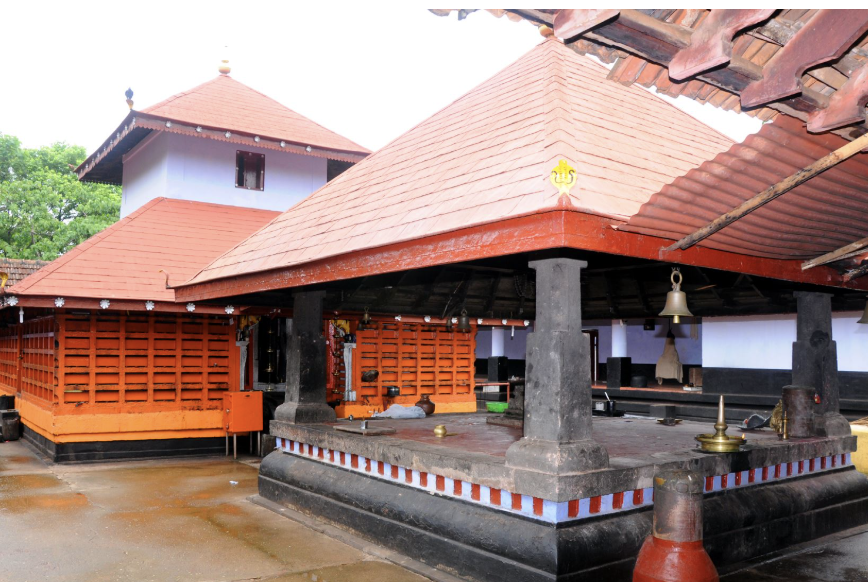
Located along the scenic Kasaragod-Kanhangad National Highway, the Sree Thrikannad Thraymbhakeswara Temple is one of the most culturally significant and unique coastal shrines in North Kerala. Known as the “Dakshina Kashi” (Varanasi of the South), this ancient temple is dedicated to Lord Shiva in the form of Trimbakeshwara, and has a legendary tradition that it is traditionally believed to have been founded by sage Parasurama, and also houses an idol enshrined by sage Kanvan. What sets this sacred temple apart from all other sacred temples in the Malabar region is its remarkable geographical orientation: it is situated on the edge of the Arabian Sea, facing west above the crashing waves. This particular design makes it an exceptionally rare and highly auspicious place, attracting thousands of devotees who travel from far and wide to perform auspicious rituals on the new moon day of Karkidaka Vav, taking a spiritual dip in the ocean adjacent to it.
The mysterious legend of Thrikannad is deeply connected to the temple’s name and the curious geographical feature visible from its shores. According to local legend, an ancient Pandya king attempted to launch a naval attack on the coastal temple. In response, the ruling deity opened his divine third eye – Thrikkan – and unleashed a fierce energy that ignited enemy ships, instantly terrifying the invading ruler into a large dark rock formation in the sea. This volcanic crust is still clearly visible from the temple shores today, and is locally known as the Pandyan Stone. Since the Lord manifested his third eye to protect the land, the surrounding area has been given the permanent name Thrikannad. Historically, the temple also served as an important spiritual headquarters for the Anjoor Nayans (a community of local socio-religious leaders), and has long maintained strong, multi-community ties with the nearby structures of the old Munnuthara, which has become a fundamental pillar of the coastal history of Malabar.
In modern times, the temple serves as a great center for the region’s heritage art forms and seasonal festivals. The grand annual temple festival, celebrated for a whole week in March or April, begins with a unified and grand procession along the beach, where neighboring deities from surrounding villages participate in the hoisting of the main flag. A beautiful night of Thidambu dance and vibrant and lively Theyyams are held on the festival grounds, especially featuring ancestral deities such as Vishnumurti. During the final days of the festival, the sacred Pallivetta (royal hunting ceremony) and Aarattum (ritual immersion) are held directly in the waters of the Arabian Sea, with the support of local fishing communities. The Thraymbhakeswara Temple in Thrikannad, located two kilometers from the historic Bekal Fort and surrounded by premium beachfront heritage resorts and homestays, serves as a great and essential highlight for digital travel guides and cultural bloggers who want to capture the raw spiritual grandeur of Kasaragod.