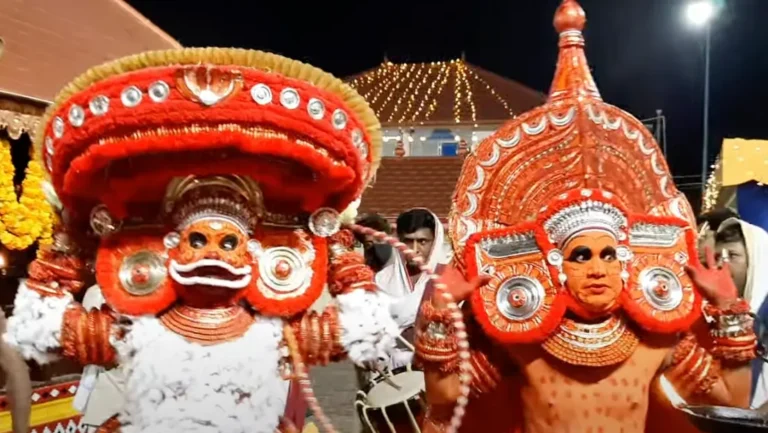

Kottiyoor Mahadeva Temple Kannur | Vysakha Mahotsavam Guide
The Legend of Kottiyoor Temple: Kerala’s 28-Day Forest Shrine Where Gods Are Believed to Descend
Deep within the lush valleys of the Western Ghats in northern Kerala lies one of India’s most extraordinary pilgrimage destinations— Kottiyoor Temple (Sree Thricherumanna Temple).
Located in the Kannur district and surrounded by dense forests, flowing rivers, and untouched wilderness, Kottiyoor is unlike any other temple in India. Rather than being defined by grand architecture, towering gopurams, or ornate structures, Kottiyoor derives its spiritual power from nature itself.
For most of the year, part of this sacred landscape remains an untouched forest. Yet, for just 28 days during the monsoon season, it transforms into one of South India’s most significant pilgrimage centers, attracting thousands of devotees from across Kerala and beyond.
The Unique Geography of Kottiyoor: A Temple Divided by a River
One of Kottiyoor’s most fascinating features is that the temple is divided into two sacred sections by the Bavali River.
Ikkare Kottiyoor (Western Bank)
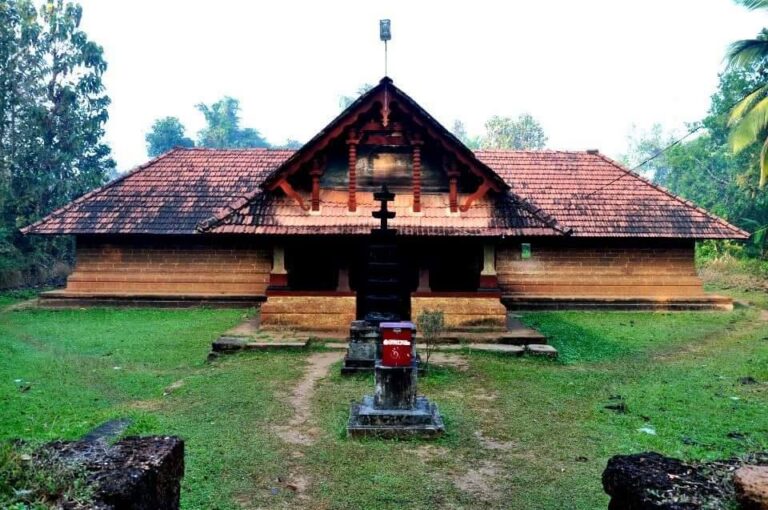
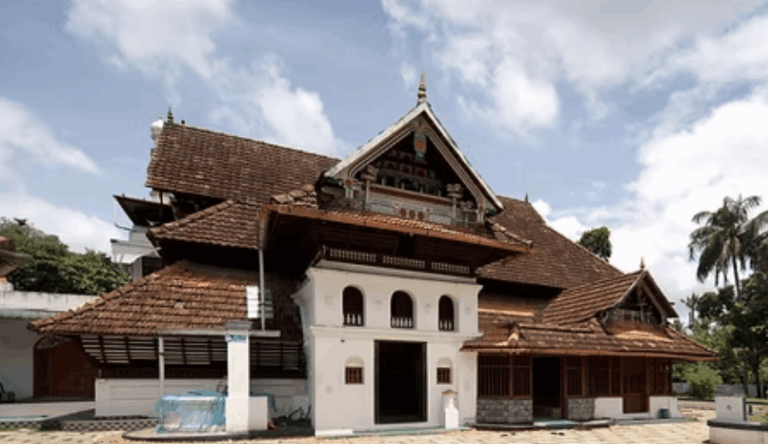
The western bank houses the permanent temple complex built in the traditional Kerala Nalukettu architectural style.
Daily worship and rituals are conducted here throughout the year, making it the primary place of worship during the non-festival months.
Akkare Kottiyoor (Eastern Bank)
The eastern bank presents a completely different experience.
There are:
- No permanent buildings
- No conventional sanctum sanctorum
- No stone temple structures
Instead, the main deity—a Swayambhoo Shiva Lingam (self-manifested)—rests on a natural mound of river stones known as the Manithara, exposed to the elements.
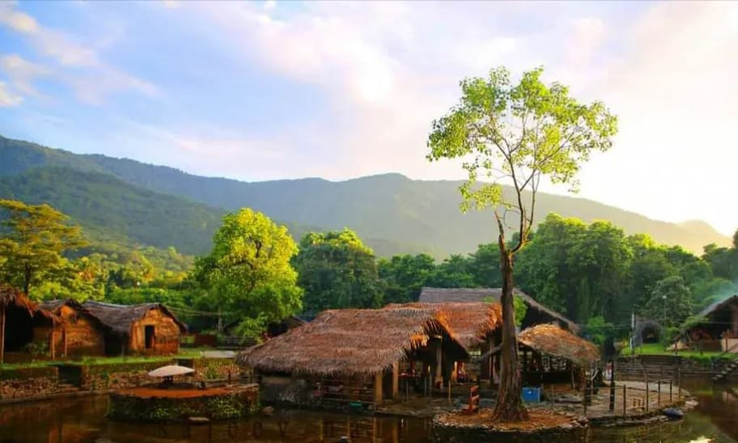
During the annual festival, all major rituals shift from Ikkare Kottiyoor to Akkare Kottiyoor. Temporary thatched structures are erected, creating an entire spiritual township in the middle of the forest and riverbed.
The Sacred Legend: The Site of Daksha Yaga
Kottiyoor is deeply associated with one of Hindu mythology’s most significant events—the Daksha Yaga.
According to the Puranas, King Daksha organized a grand sacrificial ritual (Yaga) and intentionally excluded Lord Shiva from the ceremony.
Unable to tolerate the insult directed at her husband, Sati Devi, Shiva’s consort and Daksha’s daughter, attended the ritual. There she faced humiliation from her father and, overcome with grief and devotion, immolated herself in the sacrificial fire.
When Lord Shiva learned of Sati’s death, his fury shook the universe.
From his wrath emerged Veerabhadra, a powerful warrior who descended upon the site, destroyed the Yaga, and beheaded Daksha.
Ammarakkallu Thara
Near the main shrine at Akkare Kottiyoor lies the sacred Ammarakkallu Thara, believed to be the exact spot where Sati Devi entered the sacrificial fire.
This association makes Kottiyoor one of the most revered pilgrimage centers for both Shiva and Shakti devotees.
The 28-Day Kottiyoor Vysakha Mahotsavam
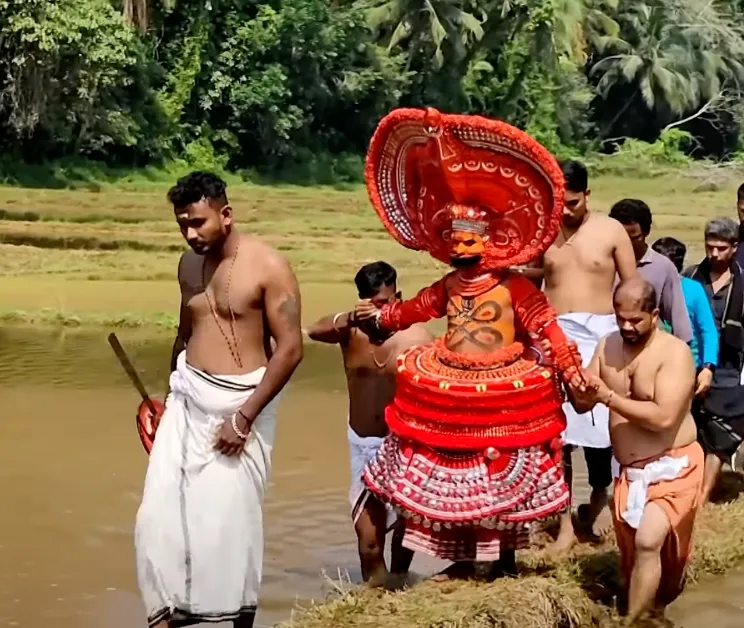
The highlight of Kottiyoor’s religious calendar is the Vysakha Mahotsavam, celebrated annually between May and June during the Malayalam months of Edavam and Midhunam.
For 28 days, the quiet forest transforms into a vibrant center of devotion, rituals, and spiritual energy.
Neyyattam – The Sacred Ghee Offering
The festival begins with the ceremonial arrival of a sacred sword from Muthirerikavu Temple in Wayanad.
This marks the start of Neyyattam, one of the festival’s most important rituals.
Thousands of devotees offer locally sourced ghee over the Swayambhoo Shiva Lingam as a symbol of devotion and surrender.
Elaneerattam – The Tender Coconut Abhishekam
One of the most visually striking rituals of the festival is Elaneerattam.
Pilgrims from across the Malabar region undertake long journeys carrying bundles of tender coconuts on their shoulders.
The coconuts are then ceremonially broken, and the Shiva Lingam is bathed in thousands of litres of fresh coconut water, creating a spectacular and deeply symbolic ritual.
Rohini Aaradhana – A Ritual of Divine Consolation
Among all festival ceremonies, Rohini Aaradhana is perhaps the most emotionally moving.
The head of the Kurumathoor family, representing Lord Vishnu, enters the shrine and embraces the Shiva Lingam.
This ritual commemorates the moment when Lord Vishnu comforted Lord Shiva after the tragic events of Daksha Yaga and Sati Devi’s sacrifice.
The ceremony symbolizes compassion, healing, and the restoration of cosmic balance.
The Sacred Odappoo: A Unique Souvenir from Kottiyoor
A visit to Kottiyoor is incomplete without obtaining an Odappoo.
This distinctive white flower-like object is handcrafted from fresh bamboo fibers by repeatedly beating and separating the bamboo strands.
Symbolic Significance
According to local tradition, the Odappoo represents the white beard of Sage Bhrigu, which was torn away during the destruction of Daksha Yaga.
Today, devotees carry Odappoo home and place it in their houses or vehicles as a symbol of:
- Humility
- Spiritual protection
- Victory over ego and pride
Important Things to Know Before Visiting Kottiyoor
Ancient Ritual Traditions
The temple follows a highly structured system of rituals believed to have been formalized centuries ago by Sri Adi Shankaracharya.
These traditions continue to be observed with remarkable precision.
Festival-Specific Access Rules
Certain customs and administrative practices apply specifically during the festival period, and visitors should follow all guidelines issued by temple authorities.
Checking the latest regulations before visiting is recommended.
Expect a Rustic Pilgrimage Experience
Unlike many modern temple destinations, Kottiyoor remains closely connected to nature.
Visitors should be prepared for:
- Walking barefoot on riverbed pebbles
- Monsoon weather conditions
- Natural forest surroundings
- Temporary festival infrastructure
The raw and unfiltered atmosphere is part of what makes Kottiyoor such a unique spiritual experience.
Why Kottiyoor Is Unlike Any Other Temple in India
Kottiyoor is more than a place of worship—it is a living connection between mythology, nature, and faith.
For 28 days each year, an untouched forest transforms into a sacred landscape where ancient legends are relived through rituals that have remained largely unchanged for centuries.
As the Bavali River flows beside the temporary shrines and the sounds of prayers echo through the forest, visitors often feel as though they have stepped back in time to witness the events of the Puranas unfold before their eyes.
Whether you are a pilgrim, history enthusiast, cultural traveler, or nature lover, Kottiyoor offers one of Kerala’s most profound and unforgettable spiritual experiences.