
Pottan Theyyam
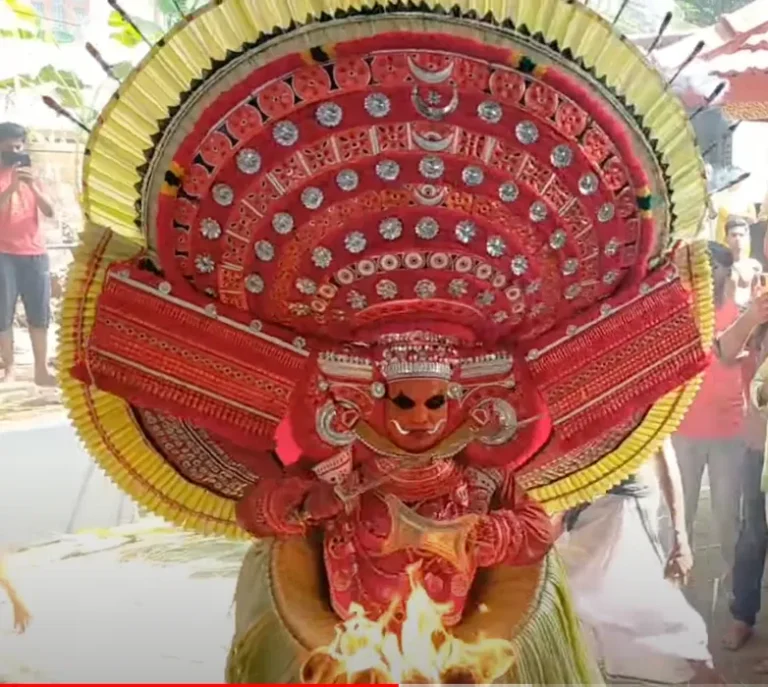
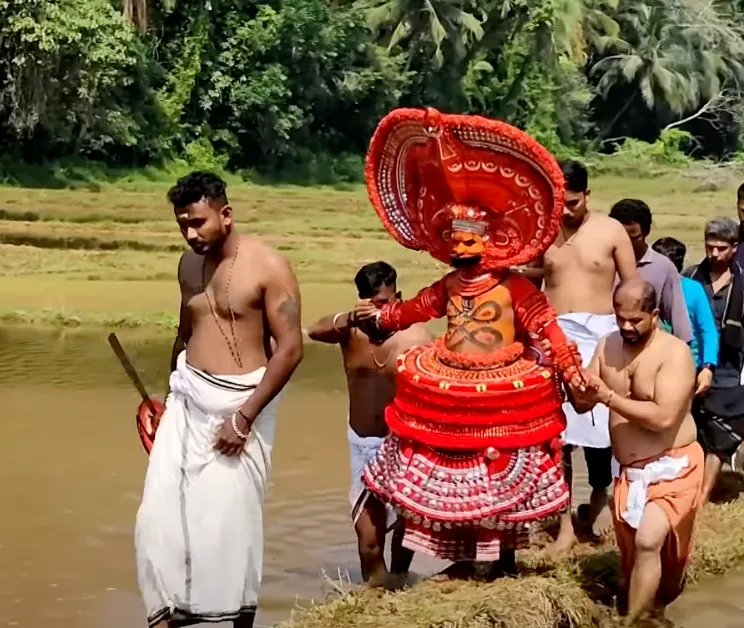
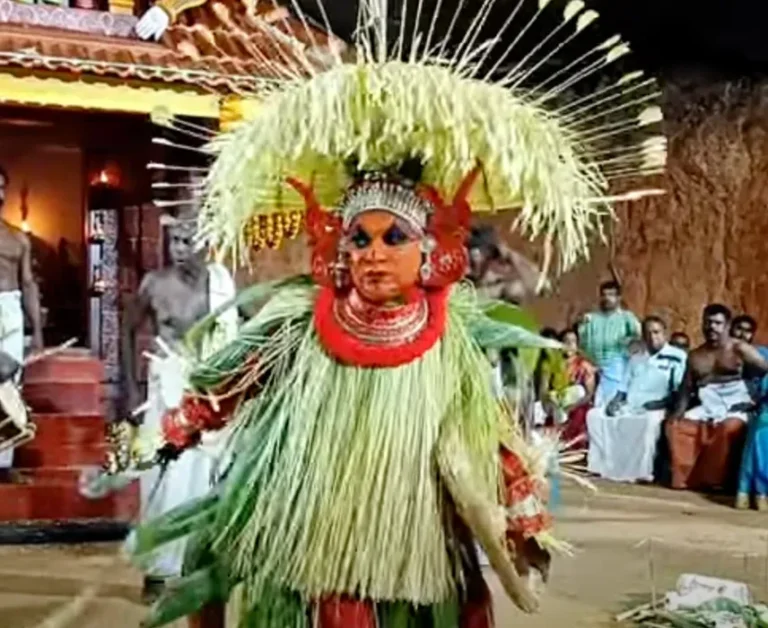
Pottan Theyyam is one of the most important Theyyam that is performed in North Kerala. Pottan Theyyam is very different from other Theyyams in terms of plot, method of performing and ceremonies.
The plot of Pottan Theyyam is the story of a divine named Alankaran who born in Pulaya community , considered as lower untouchable cast at that time, who raised a protest against the casteist prejudices and caste discrimination that existed in the past and propagated the idea that all human beings are equal. In his own way, Alankaran criticized the injustice and the corrupt system in the land with different questions. When no one was unable to answer his questions, they called him Pottan(fool). But later everyone realizes that Pottan, the great sage, is not an ordinary person but is actually Lord Shiva. The wise Pottan story was then performed as Theyyam in Malanadu. Today, Pottan Theyyam is worshiped by people regardless of caste. People from the Malaya and Pulaya communities perform potan theyam.
The more popular story about Pottan Theyyam goes like this. The great scholar Shankaracharya amazed everyone with his erudition and debates. But he was so arrogant of his wisdom and he failed to put into practice the lessons of goodness acquired through knowledge. Shankara was preparing to ascend the omniscience seat of great wisdom. Lord Shiva, wanted him to get rid of his arrogant nature and live a righteous life before that, and for that purpose, Lord Shiva appeared in the Malanad as a Pulaya avatar with name Alankaran with Parvati Devi as his Pulaya wife and Nandikesan as his child.
One day, Shankaracharya was going to Talakaveri from Sankara Narayana temple in Ramantali. During that journey he rested at a place called Pulingom near Payyannur, during which he lectured the people gathered around him on the Vedas and the universal truths. At the same time, Alankaran, who was sitting on a nearby hillock, heard his discourse and realized that Shankaracharya’s arrogant nature was reflected throughout the discourse.
The next morning Shankaracharya continued his journey. Shankaracharya, on his way, saw a Pulaya hut and an alley next to it. Shankaracharya was afraid that if he went anywhere on this route, he might meet some lower cast Pulayas on the way, because under the caste system of that time, it was unheard of for upper castes to see lower castes on the way. But Shankaracharya noticed the mother and her children in that hut. Shankaracharya walked that way, making sure that there would be no one on the road at this time as everyone was in the huts. But suddenly Shankara met a Pulaya youth on the way, who was a Alankaran. Enraged at seeing the low caste man on the road, Shankaracharya asked him to move out of the way. But the young man stood there laughing. Shankaracharya got angry seeing the behavior of the young man. Again ordered to move out of the way. The young man asked back, “Is it the body or the soul that needs to be moved?” “If you say to the body, the body is inert, it cannot move, if you say to the soul, the soul is omnipresent, it too cannot move”, Shankara. He asked again, “Whether we are carved or you are carved, is it not the same blood?” The Alankaran meant that if both the bodies were cut, they would see the same blood. Shankaran did not understand who the young man in front of him really was. “If you cross all six and go to the other side, you will find the blissful one” . The young man continued. Sankara understood that the young man meant that if he passed through the six adhara chakras, he would attain the blissful self-realization of Sahasrarapadma. Shankaran realized that the man who was shouting universal truths like a fool was no ordinary person. The great Shankaran was helpless before the wisdom of that Pulaya youth. Shankara realized that his wisdom could not be used for good in life.
Shankara prostrated before the young man and apologized for his mistakes. Shankara asked who are you great sage. In no time, the Pulaya youth disappeared and in that place real Lord Shiva appeared. Shankaran actually stood in front of Lord Shiva with folded hands. Lord Shiva blessed Shankara, the righteous man, who gave up his arrogant nature and disappeared. In later times, Lord Shiva, who took the form of Pulaya, was worshiped in the Malanad by performning Theyam ritual.
Pottan deity is performed as Theyam in three stages Pulamaruthan, Pulapotan and Pulachamundi. Pulamarutha Theiyam is Nandikesa who incarnated as a son with Lord Shiva, Pulapottan Theiyam is actually Lord Shiva himself. Pulachamundi Theyam is Goddess Parvati incarnated as Pulaya Wife as the consort of Lord Shiva. Pottan Theyya’s Thottam is very simple and principled. Women also sing potan theiyam thottam differently from other theiyams. Pottam Theiyam does not have a face painting instead wears three beautiful face mask in three stages which are pre-prepared. There is no make-up for Potan Theiyam, instead white colored Rice Powder is only applied on the body. Pottan Theyya has clothes and hair braided with Coconet leaves. Pottan Theyyam has no sword, shield or bow like other Theiyams, but Potan Theiyam’s weapons are only a small stick and a knife. Potan Theyam speaks the truths of the universe by sitting and lying on the ground and on the coals of fire instead of sitting on a pedestal.