
Kalari May Payat or Meythari
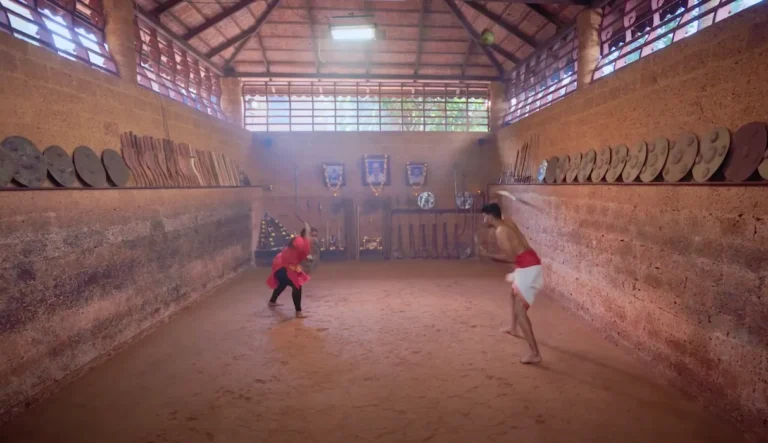
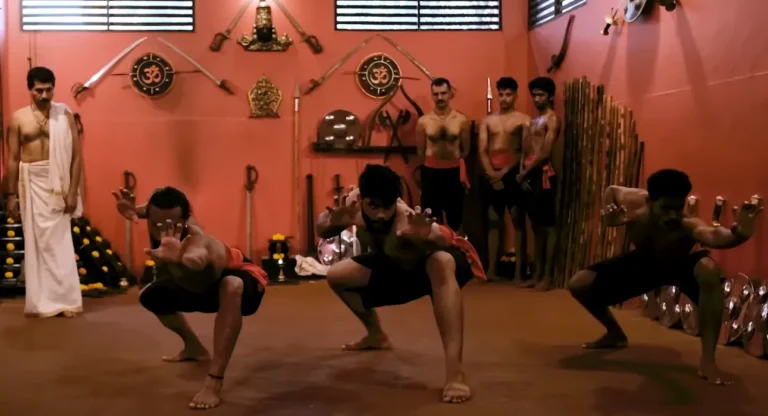
The first of the four stages in Kalari study is Mey Payattu or Meythari. The other three stages are named as Kolthari, Ankathari and Verum Kai. The main purpose of meythari is to enable the flexibility and strength that a practitioner needs. It is possible to bend and move the body at will, jump and sit in many ways with Mei Payet. Every part of Maypayet’s body gains strength and flexibility. Steps and rods which are of utmost importance in Kalaripayat are achieved through meythari.
The steps in Kalari are mainly classified as Akka chuvadukal and Neekka chuvadukal.
Stunts are movements of one or more feet to secure a position to attack and counter attack appropriately. Exercises from the floor are the key to Akka chuvadukal. Striking and blocking is what Akka does in steps.
Neekka chuvadukal are the steps that stand for any jump or transition in practice. Neekka chuvadukal are used in combat with weapons.
Apart from this important type of turning, the shape of the steps is also distinguished based on the distance between the feet into Vattakkal step (round foot step), Neelakkal steps (long foot step), cone step and Ottakkal steps (single foot step)
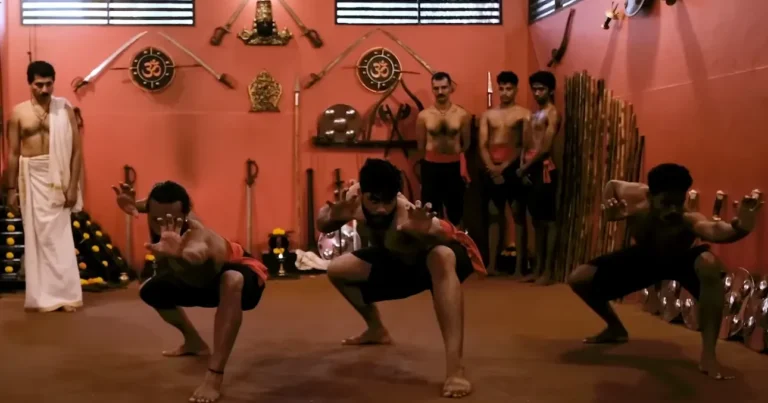
Vadivukal are as important as Chuvadukal in Maypayet. Traditionally there are eight Vadivukal in the kalari. These wands are Gajavativ, Simha Vativ, Varaha Vativ, Asva Vativ, Marjara Vativ, Sarpa Vativ, Cuckuda Vativ and Malsya Vativ. As the name suggests, these Vadivukal are designed based on the shape, movements, attack styles and defense styles of animals like elephant, lion, pig, horse, cat, snake, chicken and fish.
In addition to the above-mentioned exercises, Maypayet also involves various extremely difficult jumps. The six important kalari jumps are Thirinju Chadal, Thirinju Pongal, Vangi Thirinju Chadal, Valam piri malarnnu chadal, Othadi pongal, Chavitti pongal.
Apart from these, Meythari has some exercises to bend and turn the body easily. The main ones are Iruthikkal, Thachuvalayal, Thozhuthu Kuththal and Soochikkiruthal